The Flexibility-Centric Value Chain (FCVC)
Section outline
-
To understand the role of digital platforms, it is useful to use the Flexibility-Centric Value Chain (FCVC) framework, proposed by Rodrigues et al. (2025). This model breaks down the process of providing flexibility (and, by extension, managing shared energy) into several phases, each supported by digital tools.
The main phases are:
- Flexibility Enablement: The phase in which a consumer equips themselves with the necessary technology (e.g., photovoltaic panels, batteries, heat pumps). Platforms can support this phase with simulators and feasibility assessment tools.
- Integration/Enablement: Installation of meters and configuration of energy management systems (HEMS/EMS) that allow monitoring and controlling devices.
- Aggregation: Platforms aggregate data and flexibility potential from multiple members to create a single manageable virtual entity.
- Negotiation Preparation: Tools analyze network needs and prepare offers to be submitted to local flexibility markets.
- Market Operation: Platforms facilitate market participation, submission of offers, and receipt of results.
- Activation & Settlement: Tools send activation commands to devices (e.g., “charge the battery now”) and manage accounting and revenue distribution.
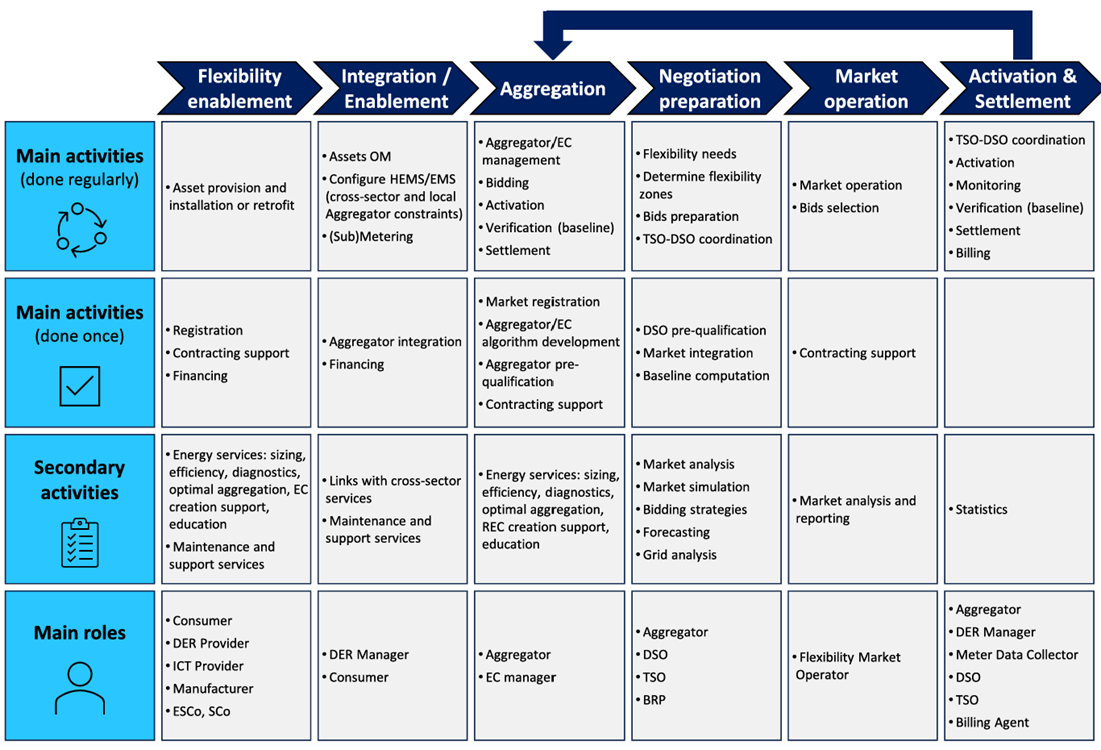
The Flexibility-Centric Value Chain (FCVC) shows the phases, activities, and roles needed to transform consumers’ flexibility potential into services for the grid. Source: Rodrigues et al. (2025).