Section outline

      • When we talk about community engagement, we are talking about people coming together in order to share ideas, make decisions, and create solutions that improve life in their communities. It’s not just about being invited to a meeting, it’s about being truly involved. Meaningful participation happens when everyone feels welcome, heard, and respected. It means that people believe their voice matters and that they can help shape the future around them.

      • To build this kind of active and open participation, it’s important that people work together based on a few key values. Trust is the first step. People need to feel safe to speak openly, without fear of being judged or ignored. Fairness is just as important. Everyone, no matter their background, education, or role in society, should have an equal chance to take part. And it’s especially important to include those who are often left out or overlooked.

        Transparency helps build confidence. When decisions are made openly and information is shared clearly and honestly, people feel more involved. It’s important to explain how things are decided and why certain actions are taken. And then there’s empowerment. This means helping people gain the skills, knowledge, and confidence they need to take part and lead. When people feel empowered, they’re more ready to speak up, take action, and support their communities.

        Working together in a meaningful way also means using good tools and approaches that include everyone. One of the most helpful skills is inclusive facilitation. This means guiding group conversations in a way that gives everyone a chance to speak, respects different points of view, and uses clear, simple language. It doesn’t take a professional to do this. Anyone can learn how to create a safe and welcoming space for open discussion.

        There are also different ways to bring people together, depending on the goals. Co-creation workshops allow small groups to work together to solve a problem or design new ideas. Public consultations are open meetings where people can give feedback on a policy, a plan, or a project. Storytelling sessions give people a chance to share personal experiences, helping others understand different perspectives and connect on a deeper level.

      • And perhaps one of the most powerful tools is shared language. Sometimes, technical or policy words can make people feel left out or confused. That’s why it’s so important to explain things clearly, using everyday words that everyone can understand. Shared language helps bridge gaps between different groups, citizens, professionals, and decision-makers, and allows all voices to be part of the conversation.

        When we combine values like trust and fairness with good tools like inclusive dialogue and shared language, we create real opportunities for collaboration and innovation. And that’s how communities grow stronger, when everyone has a seat at the table and a voice in shaping the future.

      • In April 2025, the town of Križevci, Croatia, became home to a remarkable solar energy project. For the first time in the country, a group of citizens joined forces to build a solar power plant, right on the roof of the local city market. What makes this project unique is that it is entirely owned by citizens and run through a local energy cooperative called ZEZ Sunce.

        How it started and who was involved

        The idea began after two smaller solar installations were successfully tested in Križevci in 2018 and 2019. These pilot projects helped build trust among the community and showed that local energy solutions were possible. Building on this foundation, the cooperative ZEZ Sunce was officially established in January 2023 to take on a larger project.

        The City of Križevci played an important role by offering the roof of the city market for the installation. The municipal utility company signed an agreement to lease the space and use the electricity generated. The project was funded by 127 citizens from across Croatia, one-third of them from Križevci, each with an equal say in how the cooperative is run.

        In March 2024, a public call for investment raised €140,000 in just 10 days, showing how much people supported the idea. Construction began in January 2025, and the solar plant officially opened on April 15, 2025.

        Why this project matters

        Križevci has set an ambitious goal - to become energy independent by 2030. That means generating all the energy it needs from local, renewable sources. The citizen-owned solar plant is a major step in that direction, and part of a broader plan to install many more solar systems throughout the city.

        This project also shows a new way of doing things. Instead of waiting for the government or large companies to act, the city and its people took action together. Citizens provided the funding and motivation, the city provided the space, and the cooperative handled the organization. Support at the national level also played a role; Croatia’s energy market operator HROTE secured a 12-year contract to buy the electricity at a fixed price, ensuring financial stability for the project.

        What we can learn from the city of Križevci 

        This project teaches us a lot. First, starting with small pilot projects helps build trust in the community. People are more ready to invest when they have already seen success. Second, it’s important to clearly explain everyone’s role and benefits. Citizens invest and get democratic control; the city uses its public roof; the utility company helps run the system and everyone gains. Another big lesson is that people are ready to take part if you give them a clear and simple way to join. 
        Raising €140,000 in only 10 days shows that there is strong public interest when things are well explained. Good communication is key. We also learned that teamwork between many different sectors is necessary. Citizens, the city government, the cooperative, local companies, and national institutions all had to work together. Without this cooperation, the project would not be possible. 
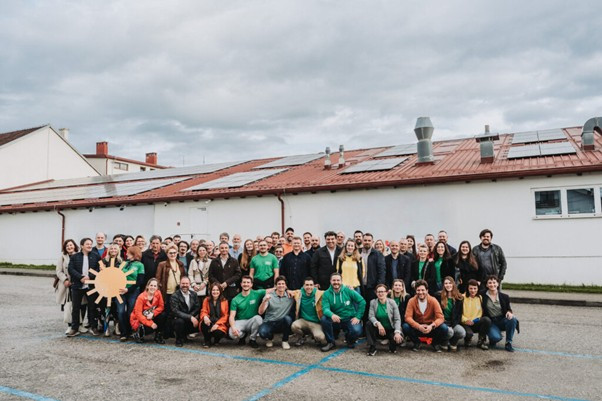
        Citizen Solar Power Plant in Križevci (Taken from https://www.zez.coop/)

        Working together for a shared future

        Križevci solar project is a strong example of what can happen when everyone plays a part. It shows that energy transition is not only a job for experts or governments. People in the community can also lead and shape their own energy future. This project proves that when we break down the walls between different groups; citizens, public institutions, businesses, we can achieve something great. It is not just about solar panels. It is about building trust, sharing responsibility, and creating a cleaner and fairer future for everyone.

      • In 2023, the city of Gabrovo, Bulgaria, became home to one of the country’s first renewable energy communities. Located in central Bulgaria, Gabrovo is a small city with a big ambition - to give local people a direct role in the clean energy transition. Through a shared solar project and a new energy cooperative, citizens, local government, and businesses came together to build something new: a power system that works for everyone.

        How it started and who was involved

        The story of Gabrovo’s energy community began with a growing local commitment to climate action. In 2021, Gabrovo became the first Bulgarian municipality to declare its intent to become carbon-neutral by 2050. As part of that vision, the city joined Greenpeace Bulgaria’s “Energy Communities” pilot initiative,  a program aimed at helping municipalities lead the way in community-owned renewables.

        In 2022, Gabrovo Municipality initiated the development of the first energy community in Bulgaria by sponsoring feasibility studies, legal and financial analysis, and exploring community ownership models. Local officials participated in EU-funded capacity building and applied to projects like TANDEMS and LIFE Loop to support the planning and the design of the REC. 

        In November 2022, a public call was issued to recruit members for the energy community. Local citizens, NGOs, SMEs, and the municipality participated. Membership was opened in two phases, first for residents of Gabrovo, then for others across Bulgaria, to ensure local prioritization. Investment contributions ranged from BGN 500 to BGN 5,000 per member. The membership campaign raised BGN 180,000 (approximately €92,000), reaching its target three weeks ahead of schedule. The fast response highlighted strong community interest and trust in the project from the very start.

        The community planned and constructed a 100 kWp photovoltaic solar power plant on a former municipal landfill site. Technical coordination and community engagement were managed as an ongoing partnership between the municipality and project members.

        Why this project matters

        Gabrovo is showing that even small cities can lead the energy transition. In a country where citizen-led energy is still new, this project is a pioneering example of what’s possible when people are invited to co-create the solution.

        It’s not just about solar panels. It’s about building trust, spreading ownership, and giving people a voice in shaping the future of energy. The project also demonstrates the value of strong local leadership: by stepping in to organize and support, the city made it easier for people to join and act.

        Although connecting the system to the national grid has faced delays, the cooperative remains active, and members are working together to push the project forward — showing how resilience and cooperation go hand in hand.

        What we can learn from Gabrovo

        Gabrovo’s story offers valuable lessons for other communities. It show how important is to:

        • Start with trust: The city’s leadership helped create a safe, transparent environment for participation.
        • Keep it fair: Capping investments and offering equal decision-making power made the process inclusive and democratic.
        • Make it real: People were eager to join, once they had a clear, practical way to get involved.
        • Work across sectors: Success came from cooperation between citizens, the municipality, technical experts, and supporting institutions.

        Working together for a shared future

        Gabrovo’s energy community proves that the clean energy transition isn’t just for experts or big companies, it’s something communities can lead themselves. With shared ownership, open participation, and strong partnerships, energy becomes more than a utility, it becomes a common good.

        This project is a reminder that when we break down barriers between people, policy makers, and institutions, we don’t just generate power, we build stronger, more connected communities.