Module 5: Community Engagement and Social Innovation
Section outline
-
-
-
In April 2025, the town of Križevci, Croatia, became home to a remarkable solar energy project. For the first time in the country, a group of citizens joined forces to build a solar power plant, right on the roof of the local city market. What makes this project unique is that it is entirely owned by citizens and run through a local energy cooperative called ZEZ Sunce.
How it started and who was involved
The idea began after two smaller solar installations were successfully tested in Križevci in 2018 and 2019. These pilot projects helped build trust among the community and showed that local energy solutions were possible. Building on this foundation, the cooperative ZEZ Sunce was officially established in January 2023 to take on a larger project.
The City of Križevci played an important role by offering the roof of the city market for the installation. The municipal utility company signed an agreement to lease the space and use the electricity generated. The project was funded by 127 citizens from across Croatia, one-third of them from Križevci, each with an equal say in how the cooperative is run.
In March 2024, a public call for investment raised €140,000 in just 10 days, showing how much people supported the idea. Construction began in January 2025, and the solar plant officially opened on April 15, 2025.
Why this project matters
Križevci has set an ambitious goal - to become energy independent by 2030. That means generating all the energy it needs from local, renewable sources. The citizen-owned solar plant is a major step in that direction, and part of a broader plan to install many more solar systems throughout the city.
This project also shows a new way of doing things. Instead of waiting for the government or large companies to act, the city and its people took action together. Citizens provided the funding and motivation, the city provided the space, and the cooperative handled the organization. Support at the national level also played a role; Croatia’s energy market operator HROTE secured a 12-year contract to buy the electricity at a fixed price, ensuring financial stability for the project.
What we can learn from the city of Križevci
This project teaches us a lot. First, starting with small pilot projects helps build trust in the community. People are more ready to invest when they have already seen success. Second, it’s important to clearly explain everyone’s role and benefits. Citizens invest and get democratic control; the city uses its public roof; the utility company helps run the system and everyone gains. Another big lesson is that people are ready to take part if you give them a clear and simple way to join.
Raising €140,000 in only 10 days shows that there is strong public interest when things are well explained. Good communication is key. We also learned that teamwork between many different sectors is necessary. Citizens, the city government, the cooperative, local companies, and national institutions all had to work together. Without this cooperation, the project would not be possible.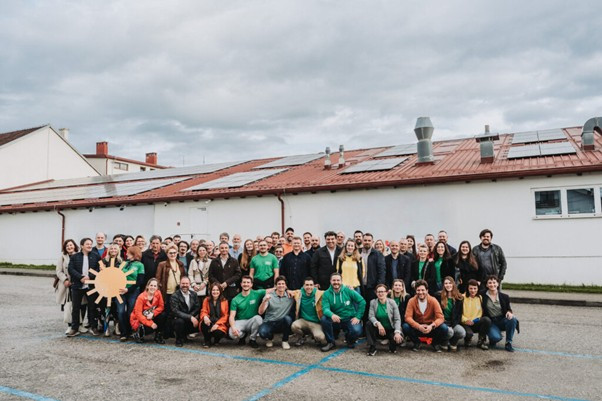
Citizen Solar Power Plant in Križevci (Taken from https://www.zez.coop/)
Working together for a shared future
Križevci solar project is a strong example of what can happen when everyone plays a part. It shows that energy transition is not only a job for experts or governments. People in the community can also lead and shape their own energy future. This project proves that when we break down the walls between different groups; citizens, public institutions, businesses, we can achieve something great. It is not just about solar panels. It is about building trust, sharing responsibility, and creating a cleaner and fairer future for everyone.
-
-
Creating Renewable Energy Communities (RECs) isn’t just about technology and infrastructure. It's about people and how they feel about change. Once people feel genuinely included, the next step is making sure they support and sustain the change. That’s where social acceptance comes in the process of building trust, legitimacy, and shared ownership in community projects like Renewable Energy Communities (RECs).
Social acceptance refers to how communities perceive and support renewable energy projects. It is a critical factor in whether these projects succeed. It goes beyond legal permissions, it’s about earning trust, belonging, and a shared sense of purpose within the community.
“Successful energy transitions depend not only on technology and finance but also on the engagement and consent of those affected.” — Wüstenhagen et al., 2007. “Social acceptance of renewable energy innovation.”
-
As we come to the close of this module, it’s clear that community engagement is not a one-off activity or a single meeting. It is an ongoing process of building relationships, trust, and shared responsibility. Whether you are a citizen, a local authority, a business owner, or a policymaker, you are part of the energy transition and how you engage makes a real difference.
We’ve seen that meaningful engagement requires fairness, trust, and transparency, and that inclusive tools, shared language, and co-ownership can transform how we work together. The examples from Križevci and Gabrovo remind us that communities are not waiting, they are already acting. But for those actions to succeed, they need support, structure, and space to grow.
This is not just a technical shift, it’s a cultural one. To build strong, inclusive Renewable Energy Communities (RECs), we must be ready to listen differently, lead collaboratively, and design with others in mind.