Module 2: Policy and Regulatory Framework
Section outline
-
The European Union (EU) has taken a leading role in the global fight against climate change. Central to its strategy is the promotion of renewable energy and the empowerment of citizens and local communities through community energy initiatives. This document provides a comprehensive overview of the EU's legislative and policy framework aimed at advancing renewable energy and integrating community participation into the energy transition.
-
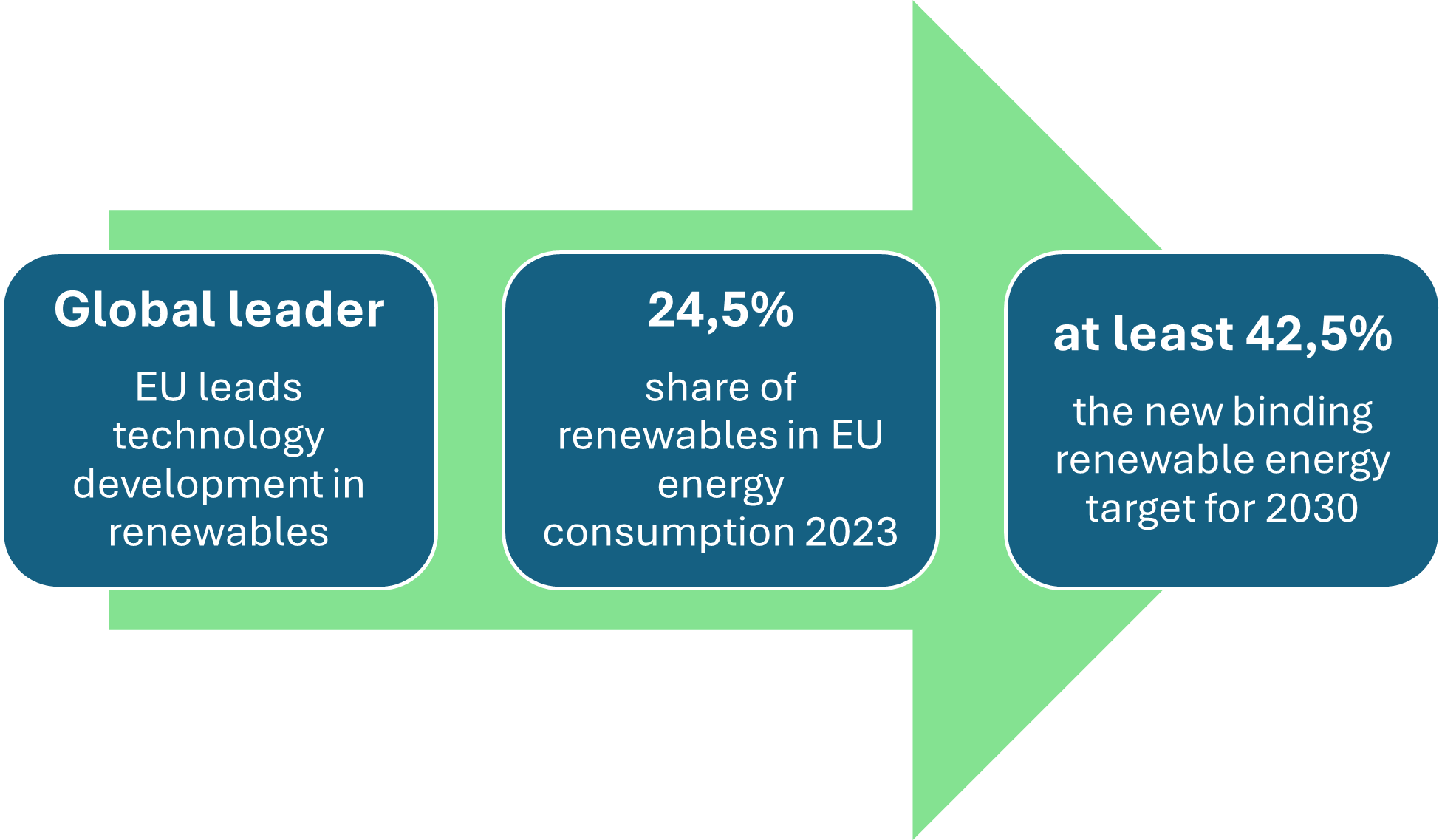
The 21st century has witnessed a growing global consensus on the urgent need to transition from fossil fuel-based energy systems to cleaner, more sustainable alternatives. The energy sector is one of the largest contributors to greenhouse gas emissions, and transforming it is essential to mitigating climate change, improving air quality, and ensuring long-term energy security. Within this context, the European Union has emerged as a global leader in climate action, implementing robust and ambitious strategies that integrate renewable energy development with broader sustainability and social goals.
The EU's climate and energy policy is anchored in international commitments, such as the Paris Agreement, and its own internal objectives, including the European Climate Law, which legally binds the EU to become climate-neutral by 2050. To achieve these goals, the EU has developed a comprehensive set of legislative instruments and financial mechanisms to accelerate the deployment of renewable energy sources (RES), improve energy efficiency, and decarbonize the economy.
One of the unique features of the EU's energy transition is the emphasis on community energy. This approach recognizes the vital role that local communities, cooperatives, and individual citizens can play in driving the energy transformation. By enabling decentralized, community-based production and consumption of energy, the EU fosters social innovation, increases public support for renewable initiatives, and ensures that the benefits of the transition are shared equitably.
The following sections will explore in detail how the EU has structured its policy landscape to support these goals, including key directives, funding programs, and the evolving role of community energy in achieving a sustainable future.
-
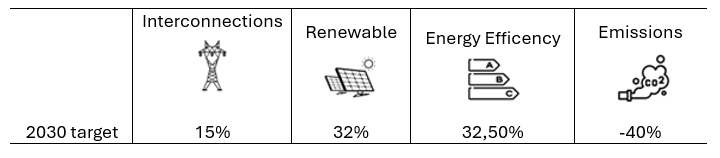
The EU's renewable energy policy is rooted in its broader climate goals, especially the aim of achieving climate neutrality by 2050. These policies are designed to reduce greenhouse gas emissions by 55% by 2030 (compared to 1990 levels) as set out in the European Climate Law. Renewable energy deployment is supported by sector-specific targets (e.g., for heating, cooling, electricity, and transport) and is accompanied by carbon pricing mechanisms such as the EU Emissions Trading System (EU ETS).
The "Fit for 55" package includes a revision of the Renewable Energy Directive, the Energy Efficiency Directive, and the introduction of the Social Climate Fund. These reforms aim to facilitate the decarbonization of energy systems through an integrated policy approach across sectors.
-
-
-

The amending Directive EU/2023/2413 entered into force on 20 November 2023, whith an 18-month period to transpose most of the directive's provisions into national law, with a shorter deadline of July 2024 for some provisions related to permitting for renewables.
- Raised the EU-wide renewable target to 42.5% by 2030, with an additional 2.5% indicative top-up.
- Introduced faster permitting procedures: Renewable energy projects in “go-to” areas must be approved within 12 months.
- Mandated sector-specific targets such as:
- 49% RES share in buildings.
- 29% RES share in industry.
- A 5.5% share of advanced biofuels and RFNBOs in transport.
- Promoted cross-border cooperation and joint renewable projects among Member States.
The main differences between RED II and RED III focus on setting significantly more ambitious and binding targets compared to RED II. With regard to permitting, RED III introduces simplified processes to address the obstacles identified during the implementation of RED II. This development marks a stronger commitment by the European Union to align energy systems with the objectives of climate neutrality by 2050. The main differences can be summarized in the table below.
RED II (2018)
RED III (2023)
Global Objective
32% of renewable energy in gross final energy consumption by 2030.
42,5% (mandatory) with na aspirational goal of 45%
Sectoral Goals
Incentivized, but not binding for specific sectors
Binding targets for the transport, industry and heating/cooling sectors.
Transports
14% renewable energy in transport by 2030.
29% reduction in the intensity of GHG emissions or 14.5% of renewables in transport.
Bioenergy
Sustainability rules introduced for bioenergy
Sustainability criteria strengthened with stricter measures.
Licensing
General framework for approval of renewable projects.
Simplified and faster licensing processes.
-
-
The EU’s Clean Energy for all Europeans Package (CEP, 2019) introduced for the first time provisions for ‘renewable energy communities’ (RECs), and ‘citizens energy communities’ (CECs), empowering citizens to take ownership of renewables instead of exclusively depending on corporations.
-
The internal electricity market reform under the Clean Energy for All Europeans package promotes:
- Dynamic pricing contracts to enable consumers to respond to market signals.
- Removal of unjustified barriers to energy self-consumption.
- Aggregation services allowing prosumers to pool energy and participate in wholesale and balancing markets.
- Smart metering and demand-side flexibility to improve grid efficiency.
- Peer-to-peer trading platforms to facilitate direct energy exchanges between consumers.
These measures promote digital innovation and decarbonization while increasing consumer engagement. Article 15 of the Electricity Directive affirms the right of households and businesses to participate actively in the energy system.
-
-
-
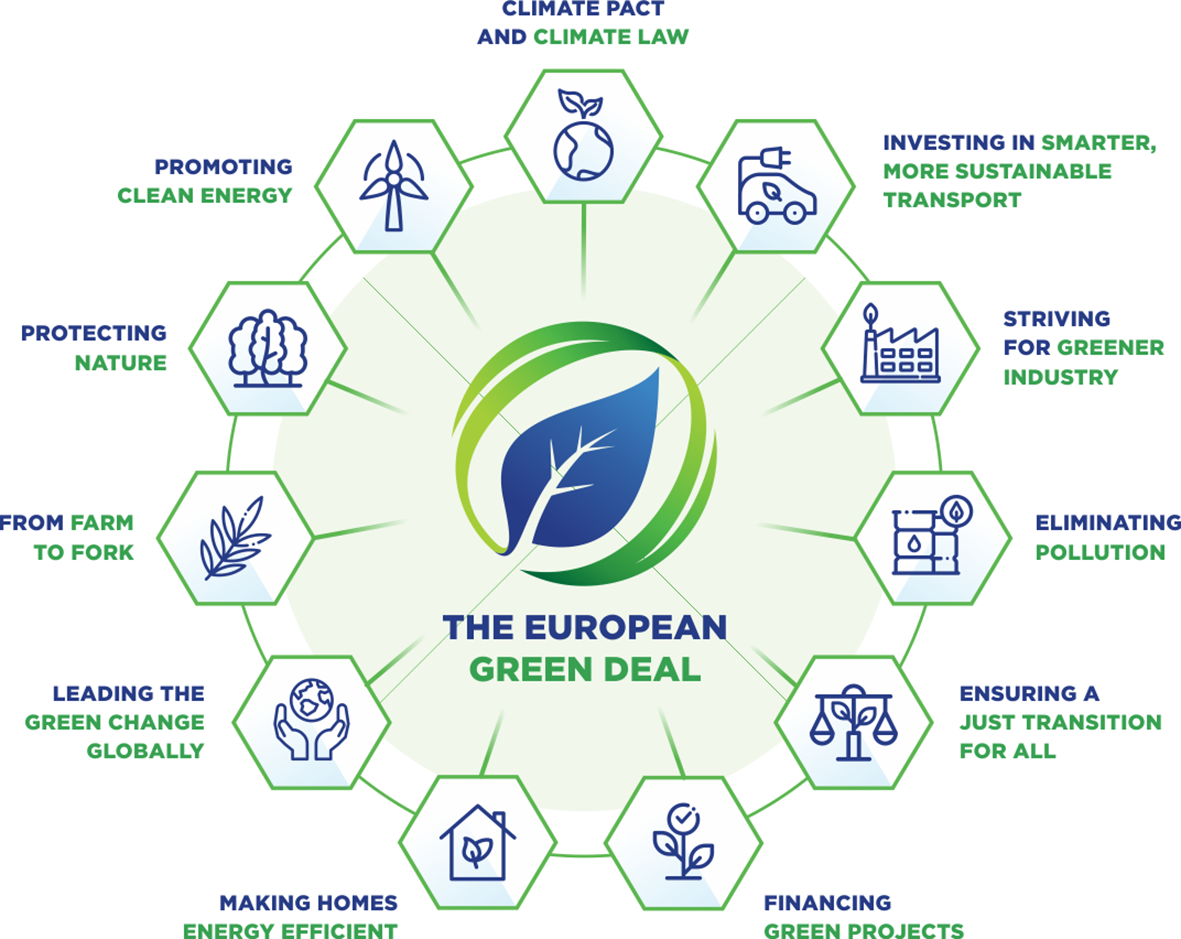
- Proposes over 50 actions to reduce emissions, promote biodiversity, ensure clean air and water, and enable a circular economy.
- Strengthens the Emissions Trading System and introduces the Carbon Border Adjustment Mechanism (CBAM).
- Supports offshore renewable energy strategy, aiming to install at least 60 GW of offshore wind and 1 GW of ocean energy by 2030.
-
-
-
- A strategic response to the energy supply crisis caused by geopolitical tensions.
- Aims to deploy over 320 GW of solar photovoltaics and 600 GW of wind power by 2030.
- Introduces the EU Solar Rooftop Initiative, requiring solar panels on new public and commercial buildings by 2027.
- Supports green hydrogen development, with a target of 10 million tonnes of domestic production by 2030.
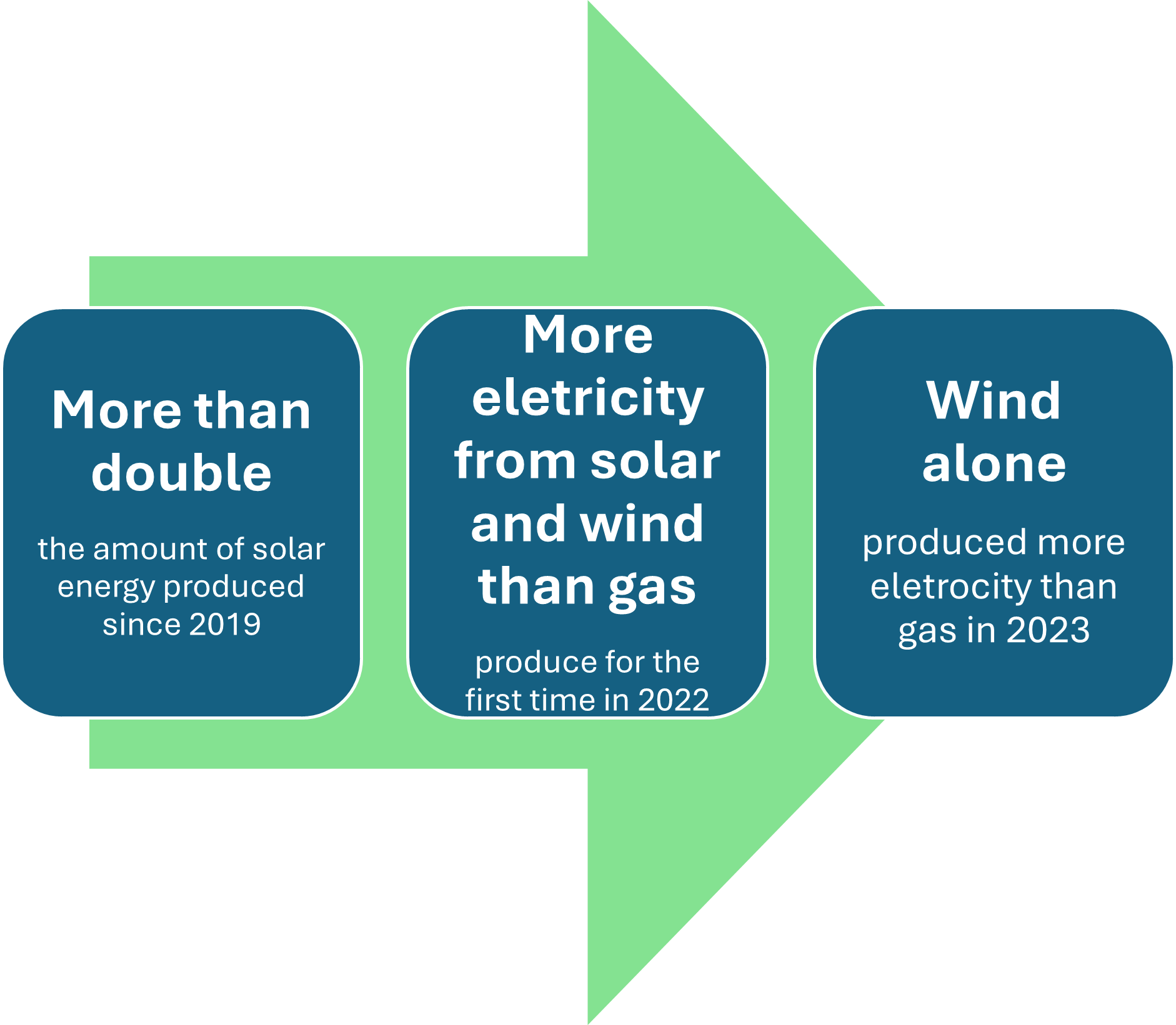
REPowerEU includes emergency regulations to accelerate permitting and provide exemptions from certain environmental assessments in predefined “go-to” zones.
-
-
-
- Horizon Europe (€95.5 billion): Finances research into renewable technologies, energy storage, smart grids, and carbon removal.
- LIFE Programme: Provides grants for pilot projects in renewable deployment, energy efficiency, and biodiversity protection.
- Just Transition Fund (€17.5 billion): Helps regions move away from fossil fuels through re-skilling, social support, and infrastructure upgrades.
- Cohesion Fund & European Regional Development Fund (ERDF): Fund community-level and regional projects in RES, particularly in less developed regions.
- InvestEU Programme: Offers loans and guarantees to support private investments in sustainable infrastructure.
- Modernisation Fund (€48 billion): Funded through EU ETS revenues, targeting 10 lower-income EU countries to modernize energy systems.
Additional mechanisms include Contracts for Difference (CfDs), feed-in premiums, and auctions to promote cost-effective renewable development.
-
Implementation varies across Member States depending on administrative capacity, local governance, and public acceptance. Notable impacts include:
- Germany’s Energiewende: Over 800 energy cooperatives, many using feed-in tariffs and regional ownership.
- Denmark: Over 40% of wind power capacity is community-owned.
- Netherlands: The Postcoderoosregeling tax scheme encourages local solar investments.
- Spain and Portugal: Recent legal reforms enable peer-to-peer energy trading and collective self-consumption.
Challenges include grid congestion, lack of financing tools for small actors, and complex permitting rules. The EU’s technical assistance facilities and streamlined approval processes aim to address these barriers.
-
The EU's renewable energy directives and supporting policies represent a comprehensive and technically sophisticated framework for achieving a climate-neutral Europe. Through a combination of binding targets, citizen empowerment, and financial support, the EU is laying the groundwork for a resilient, inclusive, and sustainable energy future. Energy communities and prosumers are no longer peripheral actors—they are central to the transformation of the European energy system.
-
-